About the Serbian Dinar
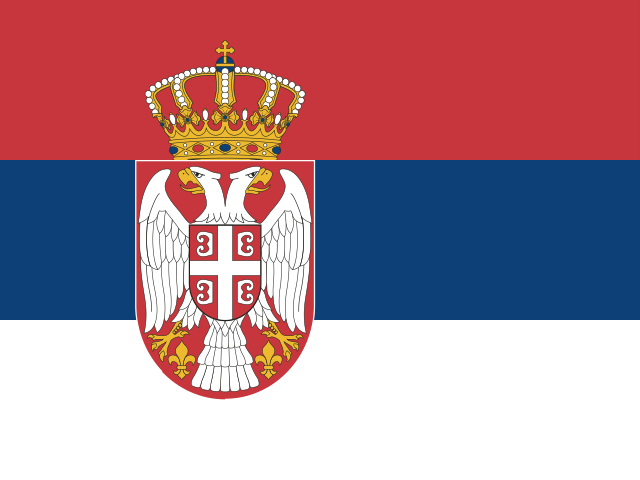
The Serbian Dinar (RSD) was officially re-established as the currency of Serbia in 2003, replacing the Yugoslav Dinar. However, the first Serbian Dinar was introduced in 1868.
The name 'Dinar' is derived from the ancient Roman coin, the 'denarius'.
Interesting Facts
Historical Figures on Notes
Serbian banknotes feature a range of prominent historical and cultural figures, including scientists Nikola Tesla and Mihajlo Pupin, and writers Ivo Andrić and Jovan Cvijić.
A Currency of Resilience
The Dinar has a turbulent history, having undergone several redenominations due to wars and periods of hyperinflation, showcasing the nation's resilience.
Path to the Euro
As a candidate country for EU membership, Serbia is on a long-term path towards eventually adopting the Euro, which would mean the retirement of the Dinar.
Historical Timeline
The first modern Serbian Dinar is introduced.
The Dinar of the Kingdom of Serbs, Croats, and Slovenes (later Yugoslavia) replaces the Serbian Dinar.
The Yugoslav Dinar experiences extreme hyperinflation.
The Serbian Dinar (RSD) is re-established.
Denominations
Banknotes
Coins
Security Features
Quick Facts
- ISO Code
- RSD
- Symbol
- дин.
- Numeric Code
- 941
- Subunit
- Para (1/100)
- Introduced
- 2003-07-01
Central Bank
- Name
- National Bank of Serbia
- Headquarters
- Belgrade, Serbia
- Founded
- 1884
- Current Governor
- Jorgovanka Tabaković (since 2012)
Economic Data
- Reserve Currency Share
- 0.0%
- Forex Volume Share
- 0.0%
- Inflation Rate
- 4.5%
- Interest Rate
- 6.50%
Exchange Rates

What Affects the RSD Exchange Rate?
Ready to Convert RSD?
Get real-time exchange rates and convert Serbian Dinar to any currency.


